Pump Guide: A Comprehensive Overview
Pumps are vital hydraulic machines transferring fluids, crucial for diverse applications like oil, water, and firefighting; understanding pump types ensures optimal system performance.
Pumps represent a cornerstone of modern engineering, facilitating the movement of fluids across countless industries and everyday life. These devices, categorized as hydraulic mechanical machines, are essential for transferring liquids or gases from one location to another, overcoming resistance and enabling critical processes.
The effective management and containment of transferred fluids are paramount in many industrial, agricultural, and municipal applications. Selecting the correct pump type is not merely a matter of convenience; it directly impacts a system’s performance, longevity, and overall efficiency. This guide serves as an introductory resource, outlining the fundamental principles, diverse types, and key applications of pumps.
Understanding pumps is crucial for anyone involved in fluid handling, from engineers and technicians to operators and maintenance personnel.
What is a Pump?
A pump is fundamentally defined as a device that expends energy to raise, transport, or compress fluids. This encompasses a broad range of mechanisms, all designed to move liquids or gases against a pressure differential. Essentially, a pump facilitates the transfer of fluid from a point of lower pressure or elevation to one of higher pressure or elevation.
Categorized as a hydraulic mechanical machine, a pump doesn’t create the fluid itself; rather, it imparts momentum to an existing fluid, enabling its directed movement. The earliest iterations focused on raising water, exemplified by ancient waterwheels and the Archimedes screw.
Modern pumps are integral to countless processes, and their selection hinges on specific application requirements.
Pump Categorization: Hydraulic Mechanical Machines
Pumps are definitively categorized as hydraulic mechanical machines due to their reliance on mechanical energy to manipulate fluids. This categorization highlights their core function: utilizing mechanical power to increase the pressure and/or velocity of a fluid, thereby enabling its movement from a low-pressure to a high-pressure zone.
The ‘hydraulic’ aspect emphasizes the involvement of fluid dynamics, while ‘mechanical’ denotes the use of rotating or reciprocating components – like impellers, pistons, or gears – to generate the necessary force. Effective fluid management and containment are often critical in industrial, agricultural, and municipal applications.
Understanding this categorization is key to selecting the appropriate pump for a given task.

Types of Pumps
Pumps broadly fall into centrifugal and positive displacement types, including piston, diaphragm, gear, and screw pumps, each suited for specific fluid handling needs.
Centrifugal Pumps
Centrifugal pumps represent a significant category within dynamic pumps, widely utilized across numerous industries due to their efficiency and reliability. These pumps operate by converting rotational energy into the kinetic energy of the fluid, subsequently transforming that energy into pressure. They are particularly effective for applications requiring high flow rates and relatively low viscosity fluids.
The core component is an impeller, which rotates within a casing, accelerating the fluid outwards. This creates a pressure difference, drawing fluid into the pump’s inlet and discharging it through the outlet. Their design allows for continuous, steady flow, making them ideal for water management, irrigation, and various industrial processes. Selecting the correct centrifugal pump involves considering factors like flow rate, head pressure, and fluid properties to ensure optimal performance and longevity.
Positive Displacement Pumps
Positive displacement pumps operate on a fundamentally different principle than centrifugal pumps, delivering a fixed volume of fluid with each cycle. This makes them exceptionally suitable for applications demanding precise flow control, handling viscous fluids, or generating high pressures. Unlike centrifugal pumps, their flow rate isn’t significantly affected by changes in system pressure.

This category encompasses several subtypes, including piston, diaphragm, gear, and screw pumps, each with unique characteristics suited to specific needs. They function by trapping a fixed amount of fluid and forcing it through the discharge pipe. Common applications include metering, chemical injection, and hydraulic systems where consistent and accurate fluid delivery is paramount. Careful consideration of fluid compatibility and pump speed is crucial for optimal operation.
Piston Pumps

Piston pumps are a type of positive displacement pump utilizing a reciprocating piston to create pressure and move fluid. A check valve system ensures unidirectional flow, drawing fluid in during the piston’s retraction and expelling it during the forward stroke. These pumps excel in high-pressure, low-flow applications, making them ideal for hydraulic systems and precise fluid metering.
Their robust construction allows handling of viscous fluids and abrasive materials, though they often require more maintenance due to the moving parts. Piston pumps can be single-acting (fluid displaced on one stroke) or double-acting (fluid displaced on both strokes), influencing flow rate and smoothness. Selection depends on the specific application’s pressure, flow, and fluid characteristics.
Diaphragm Pumps
Diaphragm pumps, another positive displacement variety, utilize a reciprocating diaphragm to create pumping action. This flexible diaphragm, often made of rubber or Teflon, moves back and forth, altering the chamber volume and drawing in and expelling fluid through check valves. They are renowned for their leak-free operation, making them suitable for handling corrosive, abrasive, and sensitive fluids.
Diaphragm pumps are self-priming and can run dry without damage, offering versatility in various applications. They are commonly found in chemical processing, wastewater treatment, and food & beverage industries. While generally offering lower flow rates compared to some other pump types, their reliability and ability to handle challenging fluids make them a valuable choice;
Gear Pumps
Gear pumps are a type of positive displacement pump utilizing the meshing of rotating gears to transfer fluids. As the gears rotate, they trap fluid between the gear teeth and the pump housing, moving it from the inlet to the outlet. These pumps excel at delivering consistent, non-pulsating flow, making them ideal for applications requiring precise fluid metering.
Gear pumps are particularly effective with viscous fluids like oils and lubricants, offering high pressure capabilities. They are commonly used in hydraulic systems, chemical dosing, and fuel transfer. However, they are sensitive to abrasive particles, which can cause wear and reduce efficiency. Regular maintenance and filtration are crucial for optimal performance and longevity.
Screw Pumps
Screw pumps, another category of positive displacement pumps, employ one or more rotating screws to move fluids along an axis. These screws intermesh tightly within a housing, creating sealed cavities that transport the fluid. They are known for their ability to handle viscous fluids and those containing solids, making them versatile for various industrial applications.
Screw pumps deliver a smooth, pulse-free flow and can generate high pressures. Common uses include pumping crude oil, sludge, and other challenging media. Single-screw pumps are particularly effective for handling fibrous materials, while multi-screw designs offer higher flow rates. Proper selection and maintenance are vital to prevent wear and ensure reliable operation, especially when dealing with abrasive substances.

Pump Applications
Pumps are essential across industries – oil & petroleum, water management, firefighting, and automotive systems – facilitating fluid transfer for critical processes and functions.
Oil and Petroleum Industry
Within the oil and petroleum industry, pumps play a pivotal role in numerous stages of operation, from initial extraction to final distribution. They are fundamentally responsible for moving crude oil and refined petroleum derivatives efficiently and safely from production and storage sites to processing facilities and, ultimately, to market destinations.

Various pump types are employed, each suited to specific tasks. Centrifugal pumps handle large volumes of fluids, while positive displacement pumps are preferred for viscous liquids and precise metering. The reliable operation of these pumps is paramount, ensuring uninterrupted supply chains and minimizing operational downtime. Careful selection and maintenance are crucial for handling corrosive fluids and maintaining environmental safety standards within this demanding sector.
Water Management (Drinking & Waste)
Effective water management, encompassing both the delivery of potable water and the removal of wastewater, heavily relies on robust pump systems. Pumps are essential for transporting drinking water from sources to homes and businesses, ensuring a consistent and safe supply for communities. Simultaneously, they are critical in collecting and conveying wastewater to treatment plants.
Different pump types are utilized based on the specific requirements of each application; Submersible pumps are commonly used in wells and lift stations, while centrifugal pumps handle large volumes in treatment facilities. Maintaining the integrity of these systems is vital for public health and environmental protection, demanding reliable performance and adherence to stringent quality standards.
Firefighting Applications
Pumps play a pivotal role in firefighting, providing the necessary pressure and flow rate to effectively deliver water or firefighting foam to extinguish fires. Firefighting pump systems range from portable pumps used by firefighters on the scene to large, high-capacity pumps installed in fire trucks and stationary fire suppression systems.
These pumps must be reliable and capable of operating under demanding conditions. Centrifugal pumps are frequently employed due to their high flow rates, while positive displacement pumps may be used for specialized applications requiring consistent pressure. Proper pump selection and maintenance are crucial for ensuring rapid and effective fire suppression, ultimately saving lives and protecting property.
Automotive Pumps
Modern automobiles rely on several pump types for optimal functionality. At least three distinct pumps are essential: lubrication pumps, cooling water pumps, and fuel pumps. Lubrication pumps circulate oil to reduce friction within the engine, extending its lifespan and improving efficiency. Cooling water pumps maintain the engine’s operating temperature by circulating coolant, preventing overheating.
Fuel pumps deliver fuel from the tank to the engine, ensuring consistent power delivery. These pumps can be mechanical or electric, with electric pumps becoming increasingly common for their efficiency and reliability. The correct operation of each pump is vital for vehicle performance and longevity.
Lubrication Pumps
Lubrication pumps are critical components within an automobile’s engine, responsible for circulating oil to all moving parts. This continuous oil flow minimizes friction, reducing wear and tear and extending the engine’s operational life. These pumps typically draw oil from the oil pan and deliver it under pressure to vital engine components like the crankshaft, connecting rods, and pistons.
Effective lubrication also aids in cooling the engine by carrying heat away from critical areas. Different designs, such as gear or vane pumps, are employed to achieve consistent oil pressure and flow. Maintaining a functional lubrication pump is paramount for preventing engine damage and ensuring reliable vehicle performance.
Cooling Water Pumps
Cooling water pumps are essential for regulating engine temperature within automobiles, preventing overheating and potential damage. These pumps circulate coolant – a mixture of water and antifreeze – throughout the engine block and radiator. By continuously moving coolant, they efficiently transfer heat away from the engine and dissipate it through the radiator’s fins.
Typically centrifugal pumps, they are driven by the engine’s belt system. A malfunctioning cooling water pump can lead to rapid engine overheating, resulting in severe consequences like warped cylinder heads or even complete engine failure. Regular inspection and maintenance of the cooling system, including the water pump, are vital for vehicle reliability.
Fuel Pumps
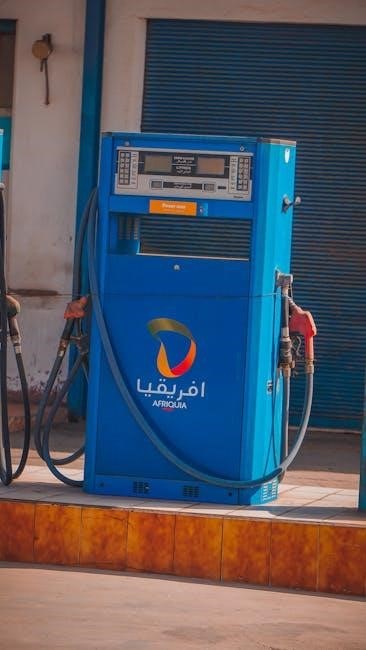
Fuel pumps are a critical component of an automobile’s engine, responsible for delivering a consistent supply of fuel from the fuel tank to the engine. Modern vehicles predominantly utilize electric fuel pumps, often located inside the fuel tank for improved cooling and noise reduction. These pumps generate the necessary pressure to overcome fuel line resistance and ensure adequate fuel delivery.
Older vehicles sometimes employed mechanical fuel pumps driven by the engine’s camshaft. A failing fuel pump can manifest as difficulty starting, reduced engine power, or stalling. Maintaining proper fuel pressure is essential for optimal engine performance and efficiency, making the fuel pump a key element in automotive systems.

Historical Development of Pumps

Early pump technologies, like waterwheels and the Archimedes screw, evolved into medieval mining advancements, driving development and improving fluid transfer capabilities over time.
Early Pump Technologies (Waterwheels & Archimedes Screw)
The genesis of pumping technology traces back to ancient civilizations grappling with the need to move water for irrigation and daily life. Early solutions centered around harnessing natural power sources. The Persian and Roman waterwheels represented foundational advancements, utilizing the kinetic energy of flowing or falling water to lift and transport it.
However, the Archimedes screw, a helical surface within a cylinder, proved particularly ingenious. Rotating this screw efficiently raised water, even against gravity, without requiring continuous lifting. This device, attributed to Archimedes of Syracuse, became a cornerstone of irrigation and drainage systems for centuries. These early pumps, though simple in design, demonstrated a fundamental understanding of fluid dynamics and laid the groundwork for more complex pumping mechanisms developed in later eras. They represent the initial steps in humanity’s ongoing quest to control and utilize fluid power.
Medieval Mining & Pump Advancements
The burgeoning mining industry during the Medieval period presented significant challenges – specifically, the removal of water that constantly infiltrated mine shafts. This demand spurred substantial innovation in pump technology. Early mining pumps were often manually operated, relying on human or animal power to drive rudimentary lifting devices. However, these proved insufficient for deeper mines.
Consequently, more sophisticated mechanical pumps emerged, frequently employing waterwheels connected to piston-based systems. These advancements allowed for the removal of larger volumes of water from greater depths, enabling miners to access previously unreachable ore deposits. The development of improved sealing mechanisms and more robust construction materials were also crucial. This period marked a transition from simple water-lifting devices to more complex, mechanically driven pumps, directly impacting the growth and productivity of medieval mining operations.

Industrial Pump Overview
Industrial settings utilize dynamic pumps (centrifugal) and positive displacement pumps, alongside mixers, for efficient fluid handling and process optimization in various applications.
Dynamic Pumps
Dynamic pumps, prominently featuring centrifugal pumps, operate by converting rotational energy into the kinetic energy of the fluid, subsequently transforming this energy into flow. These pumps excel at handling high volumes of fluid with relatively low viscosity. Their design involves an impeller rotating within a casing, creating centrifugal force that pushes the fluid outwards.
Centrifugal pumps are widely favored due to their simplicity, reliability, and cost-effectiveness. They are particularly well-suited for applications requiring continuous, steady flow, such as water circulation, irrigation, and boosting water pressure. However, they are less effective with highly viscous fluids or when high pressures are needed against significant resistance. Understanding these characteristics is key to selecting the appropriate pump for a given industrial process.
Mixers
Mixers, often categorized alongside pumps in industrial settings, are crucial for homogenous blending of fluids, solids, and gases. While not strictly pumps transferring fluid from point A to B, they utilize impeller action to create fluid motion and achieve thorough mixing. They are essential in processes demanding consistent product quality and efficient chemical reactions.
Industrial mixers come in various designs – propeller, turbine, paddle, and anchor – each suited for different viscosity levels and mixing intensities. Applications span chemical processing, food and beverage production, pharmaceuticals, and wastewater treatment. Selecting the correct mixer type depends on factors like tank geometry, fluid properties, and desired mixing outcome. Effective mixing ensures optimal process control and product uniformity.